





Commercial impact
Reliable operations make revenue easier to run.
Revenue friction rarely lives inside one tool. It appears when routing waits for a manual decision, records mean different things across teams and leaders cannot trace the numbers behind the forecast.
Move high-value work faster
Important leads, accounts and exceptions reach the right owner without waiting for private fixes.
Trust the numbers teams use
Stages, ownership and forecast outputs remain connected to explicit source decisions.
Turn exceptions into learning
Edge cases become visible operating evidence instead of recurring Slack conversations.
Revenue control layer
Make every revenue decision visible and owned.
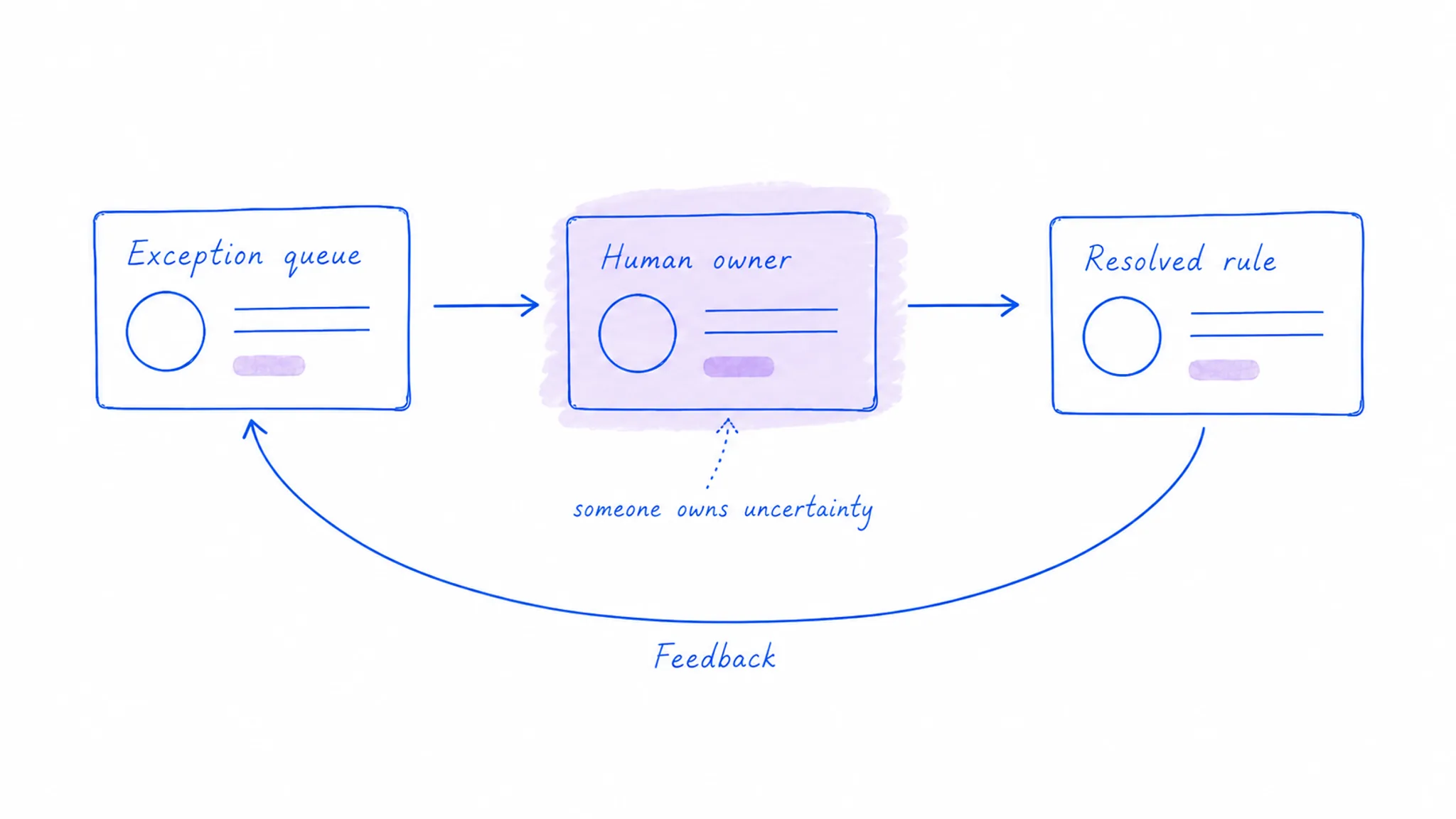
I follow one live workflow across records, tools and teams, then expose every transformation, decision, route and fallback. Automation handles the repeatable path. People retain ownership of policy, uncertainty and high-impact overrides.
Trace the real workflow
Follow the record from its first event to its final owner and identify missing data, hidden transformations and manual repairs.
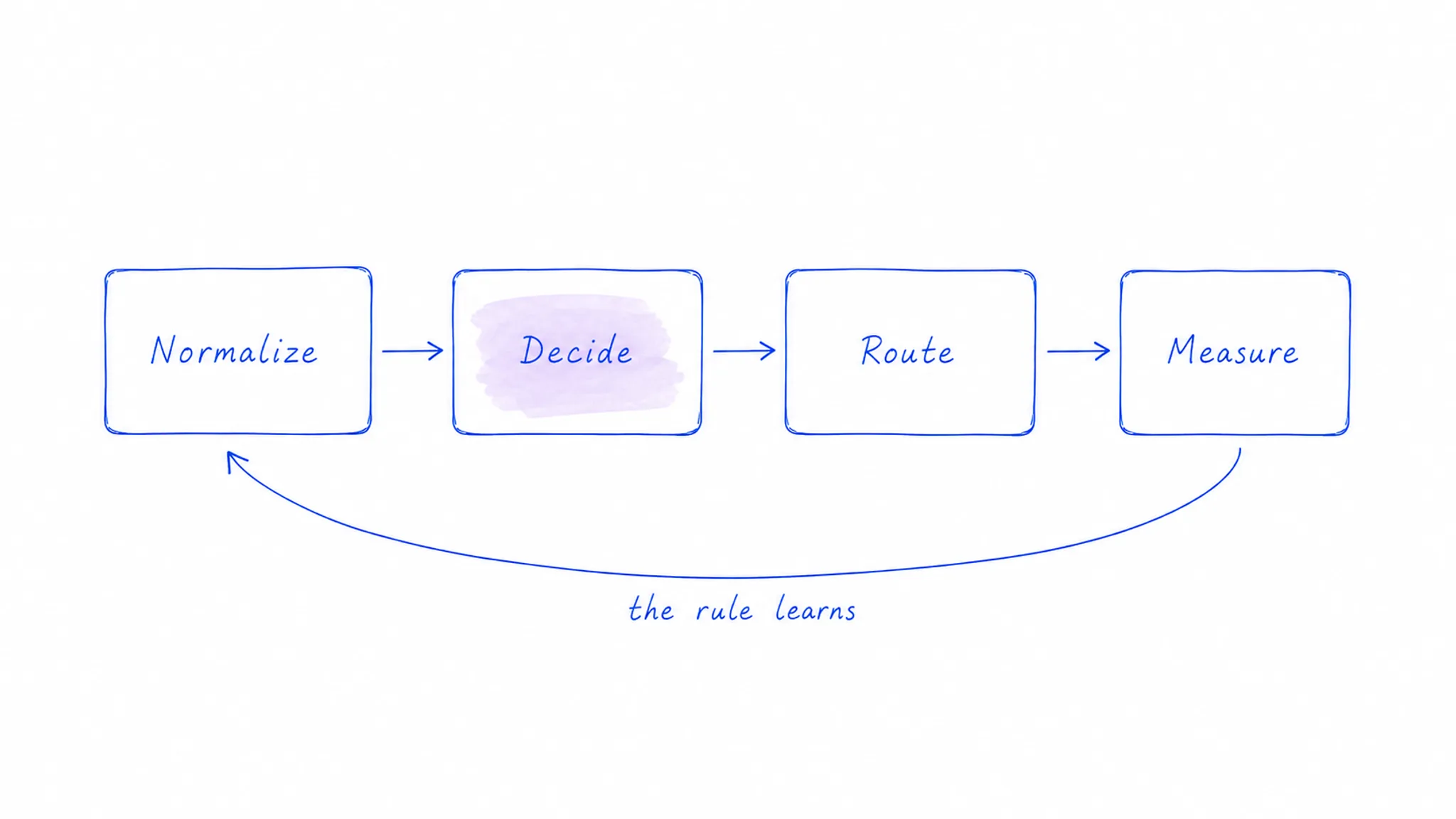
Turn judgment into operating rules
Define qualification, stage progression, ownership, routing and forecast logic in language the team can review.
Give every exception an owner
Add review queues, fallbacks and service levels so uncertainty remains visible.
Measure the outcome, not the automation
Track time to action, routing quality, data completeness, conversion and forecast stability.
Your first live system
Prove the control layer on one live workflow.
The first cycle stays deliberately narrow. We choose a workflow that matters, make its decisions explicit, put the system into production and use real exceptions to improve it.
- Trace
Follow the current reality
Follow the record, tools, owners and current failure points.
- Define
Set the operating rules
Agree on required evidence, decisions, fallbacks and review boundaries.
- Ship
Put the control layer live
Launch the automation, exception queue, monitoring and operating views.
- Improve
Return evidence to the rules
Use outcomes and edge cases to update the rules.
- RevOps / GTM
- Owns the operating policy, expected outcomes and system priorities.
- Workflow owners
- Review exceptions, validate sensitive decisions and return field evidence.
- Lever
- Designs the control layer, operates the first cycle and documents the handover.
What you own
Leave with a revenue system your team can keep running.
This is not another automation diagram. I build the operating layer, prove it against live records and transfer a system your team can inspect, maintain and improve.
Design the control layer
A documented data contract, decision rules, ownership model, source lineage, exception paths and success criteria.
Prove it live
A working workflow, review queue, monitoring views and operating evidence tested against real records.
Transfer ownership
Architecture, field dictionary, rulebook, failure modes, QA checklist and maintenance guide owned by RevOps.